

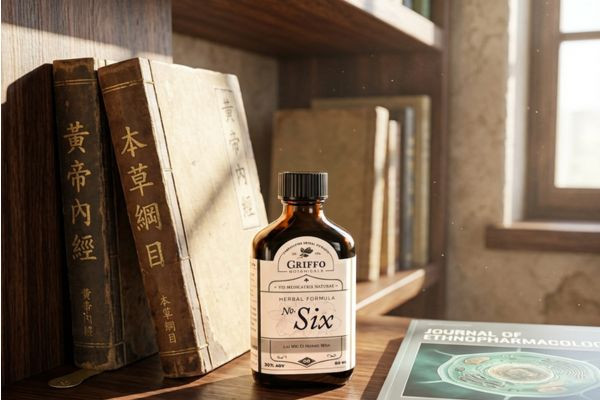
Posted by Frank Griffo, L.Ac. on Mar 16th 2026
Liu Wei Di Huang Wan: Nourishing Kidney-Liver Yin
Liu Wei Di Huang Wan (Six-Ingredient Rehmannia Pill): Nourishing Kidney-Liver Yin
Liu Wei Di Huang Wan (Six-Ingredient Pill with Rehmannia) is one of the most venerable herbal formulas in Chinese medicine. First recorded in Qian Yi’s Xiao Er Yao Zheng Zhi Jue (Key to Therapeutics of Children’s Diseases, 1119 CE), it was originally used in pediatrics. Over 900 years later it remains a cornerstone remedy for Kidney and Liver yin deficiency – the base yin of the body. I regard LWDHW as the mother formula of yin tonification: it nourishes Yin and Kidney systems in patients with deficiency and heat. It can be modified in a myriad of ways to address yin deficiency of the kidney, liver, heart, stomach, and lung. This time-honored formula stands up in modern research as regulating endocrine function, supporting adrenal (HPA) balance, improving glucose metabolism, and easing menopausal symptoms.
LWDHW exemplifies the classic (san bu san xie) design – three tonics, three sedatives. It combines three rich nourishing herbs with three herbs that gently drain excess or heat, so that the formula tonifies without stagnating. In effect, Liu Wei Di Huang Wan tonifies Yin while simultaneously taking care of any damp-heat imbalance and preventing the rich tonifying herbs from causing fluid stagnation. This balanced approach allows patients to build vital Yin without stagnation. We meticulously source each of these six botanicals for
San Bu, San Xie Structure: Three Tonics and Three Drains
The genius of LWDHW’s recipe lies in the san bu san xie framework: three heavy herbs and three light herbs in harmony. Viewing the formula as a lesson in balance, consider:
Three Tonics – Shu Di Huang, Shan Zhu Yu, Shan Yao: deeply nourish Yin, Blood, Jing.
Three Sedatives/Drainers – Ze Xie, Mu Dan Pi, Fu Ling: drain excess, dampness, or heat.
This way LWDHW tones without stagnating. Each herb has an axis of action: the tonics build Kidney-Liver Yin, the sedatives drain Kidney fire, and clear dampness. In practice, this means LWDHW can be used to nourish deep Yin deficiency while naturally moderating dampness or heat. For example:
Shu Di Huang (Radix Rehmanniae Preparata) – Chief herb. Tonifies Kidney Yin, enriches Blood and Essence.
Shan Zhu Yu (Fructus Corni) – Tonifies Liver/Kidney, binds Jing, astringes Essence, supports lower jiao.
Shan Yao (Rhizoma Dioscoreae) – Strengthens Spleen, tonifies Kidney, secures Essence.
(These three heavy herbs “address deficiencies of Kidney, Liver, and Spleen”.)
Ze Xie (Rhizoma Alismatis) – Drains Kidney fire and urination, promotes downward flow of damp turbidity.
Mu Dan Pi (Cortex Moutan) – Clears Liver and Kidney deficiency heat (e.g. steaming bone, night sweating).
Fu Ling (Poria cocos) – Promotes urination, leaches out dampness, strengthens Spleen to harmonize tonics.
Thus LWDHW tonifies yet remains light. It is an elixir to nourish yin and vitality. LWDHW is a root-level nourishing formula for yin deficiency. It works gradually, gently correcting a constitutional state rather than delivering a quick punch. By correcting the root of Yin deficiency, LWDHW can support healthy aging, hormonal balance, and resilience against stress. As modern studies suggest, it may adaptively regulate stress hormones and metabolism.
From Pediatrics to Adult Medicine: Yin Deficiency as Lifespan Physiology
Historically, LWDHW was introduced in a pediatric text (1119 CE) for childhood yin-deficiency patterns. In children, kidney yin deficiency often means malnutrition, developmental delays, or deficiency heat syndromes (such as fevers, failure to thrive). Over time, the same principles were applied to adults in middle age and beyond. In TCM, Kidney Yin is considered the wellspring of growth, reproduction, and aging. So a formula that deeply nourishes Kidney Yin in a child can equally support the mature person’s essence and hormones.
In clinical terms, a child’s physiology emphasizes growth and basic development; yang stimulates growth but it is the yin that is the basis of the growth - the substance. Thus yin deficiency patterns might manifest as delayed growth, developmental delays, poor appetite, dehydration and more. Adults’ physiology, especially as they age or undergo stress, might show Yin deficiency as hot flashes, insomnia, tinnitus, low back weakness, osteoporosis, or hormonal issues. Remarkably, LWDHW covers both ends of the spectrum. For example, pediatric cases might benefit from LWDHW’s ability to consolidate essence and calm heat; adults might use it for kidney-related fatigue, dry cough, chronic sweats, or metabolic regulation. In fact, modern research finds LWDHW is effective in both elderly and pediatric diabetes patients.
Of course, it is the underlying pattern – not age or the symptoms – that drive LWDHW’s use and efficacy. When a child or an adult shows signs of Yin and Jing exhaustion (weak bones, night sweating, dry mouth, dizziness, sexual weakness, etc.), LWDHW is indicated. By supporting Kidney/Liver Yin, it may help regulate adrenal cortisol rhythms and sex hormones (which often decline with age or chronic stress). This formula, grounded in pediatrics, can have broad endocrine benefits for adult patients.
Clinical Variations (Common Modifications)
The true art of LWDHW prescribing often lies in its modifications. Based on the core Yin-nourishing template, we add herbs to address specific coexisting symptoms or patterns. Four of the most common variants are Qi Ju Di Huang Wan, Zhi Bai Di Huang Wan, Mai Wei Di Huang Wan, and Gui Shao Di Huang Wan. Each keeps the six base ingredients and adds 2–3 herbs for targeted effect. In practice, choosing the right variation is like tuning the formula to the patient’s needs.
Qi Ju Di Huang Wan – Lycium-Chrysanthemum Rehmannia Pill. This adds Gou Qi Zi (goji berry) and Ju Hua (chrysanthemum flower) to LWDHW. Gou Qi Zi nourishes Liver blood and kidney essence, while Ju Hua clears Liver wind and heat. This modification is used when Liver Yin and Liver Blood need extra care, especially affecting the eyes and hearing. Clinically, Qi Ju DHW is famous for treating dry eyes, blurred vision, and dizziness from Yin def, and can help age-related cataract or glaucoma-like conditions. Clinically I often use it for hypertension and headaches. Temporal and ocular headaches in a patient with the right presentation will often respond well to this formula.
Zhi Bai Di Huang Wan – Anemarrhena-Phellodendron Rehmannia Pill. This adds Zhi Mu (Anemarrhena rhizome) and Huang Bai (Phellodendron bark). Both herbs are bitter and cold, strongly clearing deficiency heat from Kidney and Liver. Zhi Mu nourishes Yin while cooling, and Huang Bai particularly drains Damp-Heat from the lower burner. This variation is indicated when Yin Deficiency comes with steaming bone or empty heat symptoms: night sweats, low-grade fevers, 5-palm heat, scanty menstruation, vaginal dryness, etc. It is often used for menopausal hot flashes or adolescent “steaming bone” syndromes. This formula is so popular we made it into tincture form and named it RenBai.
Mai Wei Di Huang Wan – Ophiopogon-Schisandra Rehmannia Pill. This adds Mai Men Dong (Radix Ophiopogonis) and Wu Wei Zi (Schisandra fruit) to the base six. Mai Men Dong is a rich lung yin tonic that also benefits the Stomach, and Wu Wei Zi astringes fluid loss while calming Shen. Mai Wei DHW is used when Lung Yin is also depleted. Typical signs include chronic dry cough or wheezing, dry throat, or frequent urination/dry stools from Yin vacuity, alongside the usual Kidney Yin deficiency signs (e.g. backache, dizziness). In TCM terms, it astringes Lung Qi and nourishes Lung Yin, and secures the essence. I use it for dry cough in patients who also have Yin deficiency; I am always sure to differentiate from a dry cough due to post nasal drip which can sometimes present similarly.
Gui Shao Di Huang Wan – Angelica-Peony Rehmannia Decoction. This adds Dang Gui (Chinese angelica) and Bai Shao (white peony root), and sometimes Tao Ren/Hong Hua in broader gynecological formulas. Gui Shao DHW is geared toward blood deficiency in women. Dang Gui and Bai Shao nourish Blood and regulate the menses, while the base still tonifies Yin. It’s widely used for fertility and menstrual issues. We developed a variation of this formula (in our Phase 2 fertility product in our NuCare line) for the follicular phase of the cycle (day 6–11) to support uterine lining and blood flow. Clinically, I pick Gui Shao when Kidney/Liver Yin is present with a comorbidity of scanty or irregular menstruation, infertility, or dysmenorrhea due to cold and deficiency.
Each of these modifications is built from the base of Liu Wei Di Huang Wan itself. If a patient’s primary problem is empty heat (hot flashes, night sweats) on a backdrop of yin def, use Zhi Bai Di Huang Wan. If dry eyes or headaches from Liver yin def are prominent, use Qi Ju Di Huang Wan. If the patient has dry cough, asthma, or lung dryness in addition to Yin Deficiency, use Mai Wei Di Huang Wan. If there is gynecological blood deficiency (e.g. infertility, scanty menstruation with yin def), use Gui Shao Di Huang Wan.
Modern Biomedical Insights
Beyond classical indications, LWDHW and its variants have been examined in biomedical research on endocrine and metabolic health. The findings often align with TCM understanding:
HPA axis and stress: Animal studies show LWDHW rebalance[s] the HPA and HPG axes after chronic stress. In one model of chronic unpredictable stress, LWDHW improved mood/cognition and neuroendocrine markers to suggest LWDHW is useful for adrenal fatigue and burnout syndromes: patients with chronic stress, cortisol dysregulation, and fatigue may respond well. In practical terms, LWDHW is often viewed as an adaptogen, gently supporting the adrenal system without overstimulation.
Endocrine function (hormones): Several studies hint at endocrine-modulating effects. Network pharmacology suggests that LWDHW’s anti-diabetic effect involves insulin signaling and oxidative stress pathways. In some models, LWDHW improved blood sugar and insulin sensitivity. One rat study found LWDHW significantly reduced body weight gain – indicating potential for metabolic syndrome support.
Menopause and sex hormones: Studies combining LWDHW with phytoestrogens found it helpful for vasomotor symptoms. LWDHW is viewed in integrative practice as part of TCM endocrine support for perimenopausal and menopausal women.
Metabolic syndrome: As obesity and diabetes rise, TCM formulas for yin deficiency get reinterpreted as metabolic tonics. The formula’s ability to nourish yin while draining kidney-liver dampness (Fu Ling, Ze Xie) matches the dual pattern of yin deficiency with phlegm-damp that is often seen in such modern cases.
In summary, research portrays LWDHW as a gentle, multi-target formula: it tonifies (e.g. improves insulin, energy) while regulating (e.g. lowers lipids, cortisol, inflammation). This fits the san bu san xie concept under a modern lens: it adjusts systems toward balance.
Clinical Application: When to Build vs. Drain, Base vs. Modify
In practice, teaching others, I often say: Liu Wei Di Huang Wan is the default kidney-liver yin tonic. Use it whenever the chief pattern is Yin deficiency of the kidneys (often with liver involvement). Common contemporary presentations include:
Adrenal burnout/adrenal insufficiency: chronic fatigue with exhaustion, easily overheated, salt-craving, etc.
Menopausal symptoms: hot flashes, night sweats, irritability, bone loss, low libido, often with some anxiety or insomnia.
Postpartum or heavy-bleeding fatigue: women drained of blood and fluids after childbirth or menses.
Recurrent UTIs/nocturia in older adults: Kidney yin def can present as frequent urination, especially at night.
Idiopathic tinnitus or hearing loss: ears being a sense organ of the Kidney, chronic tinnitus from def.
When using the base formula (LWDHW) alone, the goal is nourishment with gentle regulation. It’s most appropriate when the dominant picture is deficiency, not excess. If the patient also has significant damp-heat signs (yellow tongue coat, heavy limbs, scanty dark urine), one might add more drainage (Zhi Bai Di Huang Wan).
Key decision points:
Excess vs. Deficiency: If the patient has obvious excess heat or damp (e.g. red tongue, irritability, constipation), lean toward a modification or a paired formula. If signs are purely deficiency (e.g. pale tongue, no coat, frequent night sweats but no fever, thin body), the base LWDHW is perfect.
Yin def with fire: Use Zhi Bai DHW (Zhi Mu & Huang Bai) when empty heat dominates (hot flushes, sore throat, tidal fever).
Yin def with wind/eye issues and headaches: Use Qi Ju DHW when Liver wind/heat symptoms appear (headaches, red eyes, dry eyes, vertigo).
Yin def with lung dryness: Use Mai Wei DHW if there is chronic dry cough or steamy lung patterns (thirst, hoarseness).
Yin/Blood def in women: Use Gui Shao DHW if infertility, scanty periods, dull menstruation signs (pale tongue, thin pulse) are chief.
A patient with chronic stress (burnout) might receive LWDHW plus acupuncture. Many of these patients have worked too hard, slept poorly, and pushed through illnesses to develop Kidney yin vacuity. LWDHW can be a foundation here. For patients with metabolic syndrome or diabetes, LWDHW may help if there’s a yin-def component (e.g. obesity with insomnia, night sweats). It can be combined with lifestyle change. One integrative use is pairing LWDHW with an insulin-sensitizing herb (like Huang Lian or San Qi), if blood sugar is an issue. But the timing is often after the acute metabolic factors are addressed responsibly. For fertility, many practitioners start Gui Shao Di Huang Wan several months before conception, to build a more robust Yin and Blood foundation. They might then switch to other herbs closer to ovulation.
By framing LWDHW not as a mystical cure but as a principled yin tonic, TCM students and clinicians can apply it with clarity. Its warm, mentoring tone fits a formula that “carries the wisdom of physicians through generations.” We teach that LWDHW nourishes from the ground up – quite literally building marrow, yin, and essence – and in doing so, it builds the body’s capacity to deal with stress, aging, and modern ailments.
TCM Clinical Pearls:
Three Bu, Three Xie: Always view LWDHW as 3 tonics (blood/Yin builders) vs 3 drains (damp/heat relief).
Patient cue: Poor tolerance of stimulants, needing naps, or constant dry mouth can hint at Yin Def – consider LWDHW.
Variant tip: Qi Ju DHW for eyes/headaches (add Gou Qi, Ju Hua); Zhi Bai DHW for hot flashes/steaming bone (add Zhi Mu, Huang Bai); Mai Wei DHW for dry cough (add Mai Men Dong, Wu Wei Zi); Gui Shao DHW for women’s blood deficiency (add Dang Gui, Bai Shao).
Build vs Drain: Use base LWDHW in general Yin deficiency; choose Zhi Bai DHW if fire signs demand extra clearing.
Integration: Think “yin coolant and nourish” in stress syndromes. It can be taken as pills, powder, or even a LWDHW tincture for convenience.
In closing, remember: Liu Wei Di Huang Wan is the definitive formula to nourish the yin of the Kidney and Liver. Clinicians who master its use – base and variations – gain a powerful tool for supporting endocrine balance, ameliorating deficiency heat, and restoring vitality.
All Sources
ajtcvm.org - Liu Wei Di Huang Wan (Six-Ingredient Pill with Rehmannia) - American Journal of Traditional Chinese Veterinary Medicine. Liu Wei Di Huang Wan is considered the most famous basic tonic herbal formula to treat Kidney and Liver Yin Deficiency.
bestchinesemedicines.com - Liu Wei Di Huang Tang (Rehmannia Six) - Liquid Extract (Tincture). Rehmannia Six Formula – Liu Wei Di Huang Tang is a classic traditional Chinese herbal formula often used to nourish the Yin and Kidney systems.
pmc.ncbi.nlm.nih.gov - Anticancer drug discovery from Chinese medicinal herbs - PMC. The network pharmacology approach successfully applied to clarify the possible therapeutic mechanisms of Liu-Wei-Di-Huang-Wan. Results indicated that the effects on the “Yin deficiency” pattern was mediated by maintaining homeostasis in the endocrine system, the immune system and metabolism.
pmc.ncbi.nlm.nih.gov - Liuwei Dihuang formula ameliorates chronic stress-induced emotional and cognitive impairments in mice. Found that LW can rebalance the hypothalamic-pituitary-adrenal (HPA) and hypothalamic-pituitary-gonadal (HPG) axes.
needles.blog.br - O Liu Wei Di Huang Wan é a fórmula base mais respeitada da história da MTC para repor essa essência vital, promovendo um envelhecimento saudável e combatendo os sintomas do esgotamento moderno.
pmc.ncbi.nlm.nih.gov - Liuwei Dihuang Lowers Body Weight and Improves Insulin and Leptin Sensitivity in Obese Rats - PMC. Suggests LWDH has potential as a preventive or therapeutic natural product against overweight and obesity.
mskcc.org - Liu Wei Di Huang Wan | Memorial Sloan Kettering Cancer Center. Clinical studies indicate effectiveness of LWDHW against diabetes and diabetic nephropathy, and its use was found to be safe in elderly as well as pediatric patients.
ajtcvm.org - Mai Wei Di Huang Wan (Ophiopogon, Schisandra and Rehmannia Pill) - American Journal of Traditional Chinese Veterinary Medicine. Nourishes Liver and Kidney Yin, astringes Lung Qi and nourishes Lung Yin.
chorusforlife.com - Gui Shao Di Huang Wan - Angelica-Paenia-Rehmannia Decoctions. Nourishes the Liver and Kidneys, Tonifies Yin and Blood, Clears Deficiency Heat.
pmc.ncbi.nlm.nih.gov - Effects of the Chinese Herbal Formulation (Liu Wei Di Huang Wan) on the Pharmacokinetics of Isoflavones in Postmenopausal Women. LWDHW is potentially effective for postmenopausal women with intolerable vasomotor episodes.
acupunctureintribeca.com - Chronic Stress vs. Anxiety: Treating Adrenal Fatigue with Chinese Medicine. Liu Wei Di Huang Wan: The gold standard formula for nourishing Yin.