

Posted by Frank Griffo on Mar 23rd 2026
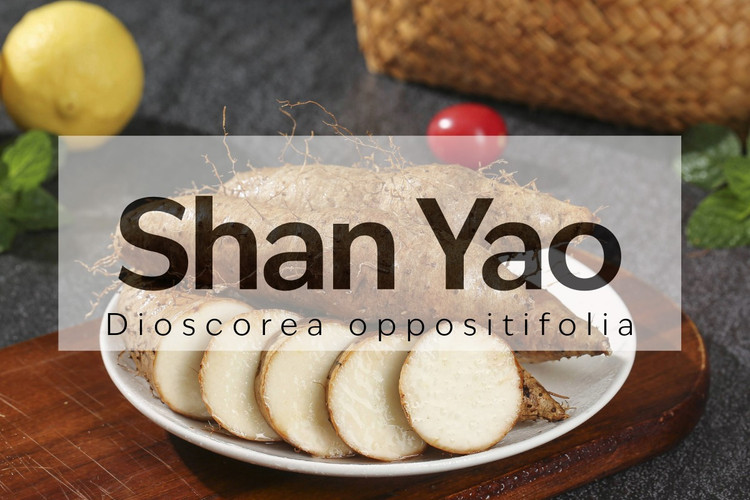
Shan Yao: The Gentle Power of the Mountain Tuber
Shan Yao: The Gentle Power of the Mountain Tuber
There is an old legend from Chinese history that I often share with students when they ask why a common food item—the Chinese Yam—holds such a prestigious place in our Materia Medica. As the story goes, a small army found itself besieged and trapped on a mountain by a much larger force. Their supply lines were cut, and they were left to starve. After weeks, the opposing army expected to find only skeletons. Instead, they were met by soldiers who were strong, fierce, and more vibrant than they had been before the siege.
The secret? The soldiers had discovered a wild tuber growing in abundance on the mountainside. They ate the roots, and their horses ate the vines. This Mountain Medicine—or Shan Yao—saved their lives. It did not just provide calories; it provided Qi. It turned a desperate situation into a position of strength. This story illustrates the core essence of Shan Yao: it is a gentle power that builds the body from the inside out, even when resources are low.
The History of the Name and the Importance of Terroir
Interestingly, Shan Yao was not always called Shan Yao. In the Shen Nong Ben Cao Jing, it was referred to as Shu Yu. However, during the Tang Dynasty, the name was changed to avoid a naming taboo involving Emperor Tai Zong whose name contained a similar-sounding character. It was later changed again during the Song Dynasty for similar reasons, eventually landing on the name we use today: Mountain Medicine.
In my years of sourcing and manufacturing, I have learned that not all Shan Yao is created equal. The most prized material comes from the Huai River region in Henan Province, often referred to as Huai Shan Yao. This specific terroir produces a tuber that is dense, heavy, and rich in the active polysaccharides that give the herb its medicinal heft. When you hold a high-quality piece of dried Huai Shan Yao, it should feel like a piece of chalk—solid—not light or spongy.
A Clinical Mentor’s Perspective: The Three Jiao Tonics
In the clinic, we often look for herbs that kick the system into gear. But in our modern world, where patients are often wired but tired or suffering from chronic depletion, we need something that tonifies without cloying. Shan Yao is unique because it enters the Spleen, Lung, and Kidney channels. It is neutral—neither hot nor cold—making it the ultimate safe herb for long-term use in pediatric, geriatric, and convalescent care.
When we look at the Spleen, Shan Yao does not just boost Qi like Huang Qi might. It stabilizes the Spleen’s transformative function. If you have a patient with leaky digestion—loose stools, fatigue after eating, or a pale tongue with a thin coat—Shan Yao provides the structural integrity needed to stop the leak.
For the Lungs, it addresses both the Qi and the Yin. It is indispensable for that weak chronic cough that persists long after a cold has passed. For the Kidneys, it is one of the few herbs that can tonify both the Qi and the Yin of the Kidney without being overly greasy or difficult to digest. It seeds the Kidney Essence, providing a foundation for other, more directional herbs to work.
Not Just Window Dressing: Shan Yao in Classic Formulas
It is a mistake to view Shan Yao as a filler. When you look at the architecture of our most famous formulas, Shan Yao is often the anchor that allows the other herbs to succeed.
Take Liu Wei Di Huang Wan (Six-Flavor Rehmannia Pill). While Shu Di Huang is the king, acting as the heavy, rich tonic for the Kidney Yin, Shan Yao is the essential minister. It supports the Spleen to ensure the heavy Shu Di does not overwhelm the digestion, while simultaneously tonifying the Kidney and Lung. It provides the gentle moisture that balances the formula’s more draining elements like Ze Xie and Dan Pi.
In Shen Ling Bai Zhu San, Shan Yao works alongside Lian Zi to stop diarrhea by tonifying the Spleen and binding the stools through its mild astringent nature. Here, it is not just about movement; it is about consolidation. As Jiao Shu-de points out, Shan Yao is particularly adept at treating Spleen-Deficiency diarrhea because it nourishes the Yin of the Spleen—a concept often overlooked in favor of Spleen Qi or Yang.
Because of its unique ability to tonify the Spleen, Lung, and Kidney channels simultaneously, Shan Yao is a cornerstone of our pharmacy.
Griffo Formulas Featuring Shan Yao:
-
No. Six -
Shenlien -
Phase Two Phase Four
Modern Research: Beyond the Classics
Modern science is finally catching up to what the Shen Nong Ben Cao Jing told us thousands of years ago. Research into Dioscorea opposita has identified diosgenin as a key compound. Diosgenin is a precursor for various steroids and has been shown to support endocrine health and have anti-inflammatory effects.
Furthermore, the polysaccharides in Shan Yao have been studied for their prebiotic effects, helping to flourish the good bacteria in the microbiome. This explains why, in TCM, we say it strengthens the Spleen and Stomach—it is literally feeding the environment that allows for healthy digestion and immunity.
The Griffo Method: Why Dual-Extraction Matters
From a manufacturing standpoint, Shan Yao presents a unique challenge. It is incredibly high in starch and mucilaginous polysaccharides. If you simply perform a standard alcohol extraction, you miss the soul of the herb. The polysaccharides, which are responsible for much of its immune-modulating and gut-healing properties, are water-soluble.
At Griffo Botanicals, we utilize a dual-extraction process. We perform a long, temperature-controlled extraction to pull out every bit of those soothing, tonifying starches and sugars. We then combine this with a precise alcohol extraction to capture the more subtle alkaloids and saponins. This results in a powerful extract ensuring your patients get the full power of the herb in a convenient form.
Summary
Shan Yao is the quintessential mentor herb. It does not demand attention with intense flavors or drastic actions. Instead, it offers a steady, reliable hand. Whether you are treating a child with a weak appetite, an athlete recovering from overtraining, or an elderly patient needing to conserve their Essence, Shan Yao is a foundational tool. It is the gentle power that makes the rest of your formula possible.
References & Further Reading:
Bensky, D., Clavey, S., & Stöger, E. (2004). Chinese Herbal Medicine: Materia Medica.
Chen, J. K., & Chen, T. T. (2004). Chinese Medical Herbology and Pharmacology.
Jiao, S. (2003). Ten Lectures on the Use of Medicinals.
Mitchell, C., et al. (2010). Ten Lectures on the Use of Medicinals (from the perspective of "Walk Along the River").