

Posted by Frank Griffo, L.Ac. on Feb 4th 2026
The Heart-Mind
The Heart-Mind
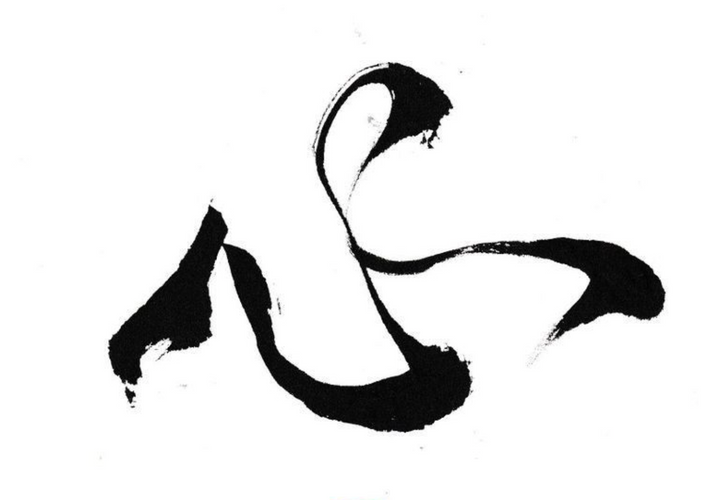
In the modern West, we have inherited a way of looking at ourselves that partitions our sense of self: we think with our brains—the cold, logical seat of reason—and we feel with our hearts—the warm, sometimes irrational seat of emotion. This Cartesian dualism creates a psychological wall that doesn't exist in the Chinese tradition. The term for this integrated center is Xin (心). To translate Xin simply as Heart or Mind is to lose its essence. It is the Heart-Mind. It is a single, unified awareness where cognitive processing and emotional experience are the same movement. Think of the Xin as one's intuition, not the "gut feeling" of the west, but the immediate, non-discursive knowing that doesn't need to pass through the Yi (the calculating intellect) to be true. It is the combination of feeling and thinking—not as two things joined together, but as a single, resonant frequency.
If you tell a patient, "Your Heart-Mind is out of balance," they might nod politely but not really get it. But if you say, "You’ve lost touch with your intuition because your mind is overactive," they get it instantly. When a patient walks into the clinic with anxiety, they aren't suffering from an emotional problem that is separate from their mental clarity. In Traditional Chinese Medicine, we see that when the Xin is disturbed, the entire seat of consciousness is affected. This is why a person who is anxious often finds they cannot focus or think clearly. It isn't that their brain is broken and their heart is sad; it is that their Xin is unsettled. This deep integration is why your physical symptoms, such as palpitations or insomnia, are so inextricably linked to your mental state. You cannot treat one without treating the other because, in the world of the Xin, they were never separate to begin with.
Understanding Yi and Xin
Before we dive into the philosophical schools of thought, we have to clarify a critical distinction within the mind itself: the difference between the Xin (Heart-Mind) and the Yi (Intellect). If the Xin is the ruler, the Yi is the scholar. The Yi is the part of us that handles directed thought, study, and the formation of intentions. It is the mind that works, plans, and ruminates. In a healthy system, the Yi serves the Xin. It takes the broad wisdom and presence of the Heart-Mind and translates it into specific action.
The problem we face today is that our modern world is designed to over-stimulate the Yi. We are constantly planning, analyzing, and "trying" to solve the puzzles of our lives. When the Yi is stuck in a loop—what we call rumination—it begins to consume a massive amount of energy—the Spleen becomes exhausted, blood becomes deficient, and the Heart-Mind starves of nutrients. This is the physiological bridge between overthinking and anxiety. By the time a patient feels the fluttering in their chest, their Yi has already spent months or years depleting the resources intended for their Xin.
The Mencian Perspective: Nurturing the Fragile Sprouts
Once we understand that the Heart-Mind is a unified field, we can look at the different ways it falls out of balance. Mencius believed that the Xin is born with four innate seeds or seeds: compassion, ritual, wisdom, and righteousness. These aren't things we have to learn; they are our original nature. However, these sprouts are fragile. They require the right environment to flourish, and they can be easily trampled by the harshness of life. This is Mencian Anxiety: the state of being so stripped by life’s demands that your original nature feels lost. In the clinic, this looks like the patient who is melancholic, easily startled, and prone to crying. They feel thinned out, as if the world is too loud or too bright for their fragile spirit. Their Xin is not "evil" or "broken"; it is simply starving for nourishment.
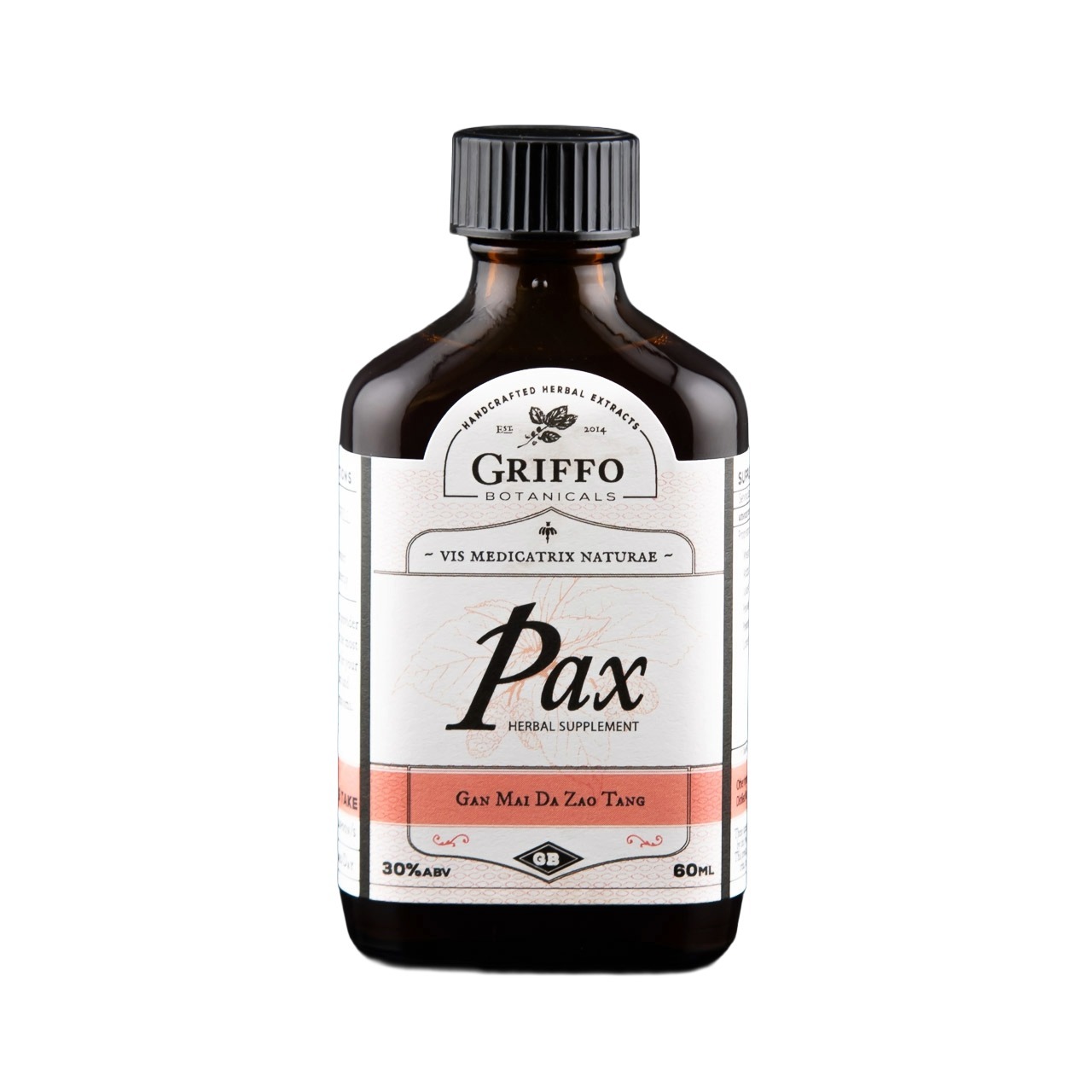
The Mencian Remedy: Pax (Gan Mai Da Zao Tang)
To treat a Mencian heart, we use Gan Mai Da Zao Tang, which Griffo calls Pax (Peace). This formula is thousands of years old and is remarkably simple, consisting of Licorice, Wheat, and Jujube. In a medical world that often looks for "powerful" sedatives, Pax is a radical departure because it is essentially food. It works by nourishing the Spleen and Heart, providing the sweet, grounding energy required to "water the seeds." It replenishes the fluids and Qi so that the Xin has the substance it needs to feel secure again. When a patient takes Pax, they aren't being sedated; they are being fed. It restores the soil of the Heart-Mind so that the original, peaceful nature of the sovereign can regrow. It is the ultimate formula for the weary caregiver or the person who has been "cut down" by the weight of their responsibilities.
The Taoist Perspective: Clearing the Mirror
The Taoist sages, Laozi and Zhuangzi, offer a different lens. They weren't interested in cultivating seeds; they were interested in embacing emptiness. To a Taoist, the Xin is like a mirror or a still pond. Its purpose is to reflect reality exactly as it is. However, the mirror becomes useless when it is covered in dust, and the pond becomes muddy. For the Taoists, anxiety is not caused by a lack of nourishment, but by an excess of "clutter"—desires, identities, plans, and intellectual noise.
Taoist Anxiety is the anxiety of agitation. It is the "tired but wired" state where the Heart-Mind is so full of activity that it creates internal heat. If the water in the pond is boiling, it cannot reflect the moon. In the same way, if a patient’s Xin is agitated by "empty heat" from Yin deficiency, they cannot find stillness. This presents as racing thoughts at night, night sweats, restlessness, and a red tongue tip. Their Xin is not starving; their Xin is being crowded out by chaos. To find peace, they don't need to add more; they need to "fast the heart" and clear the room.
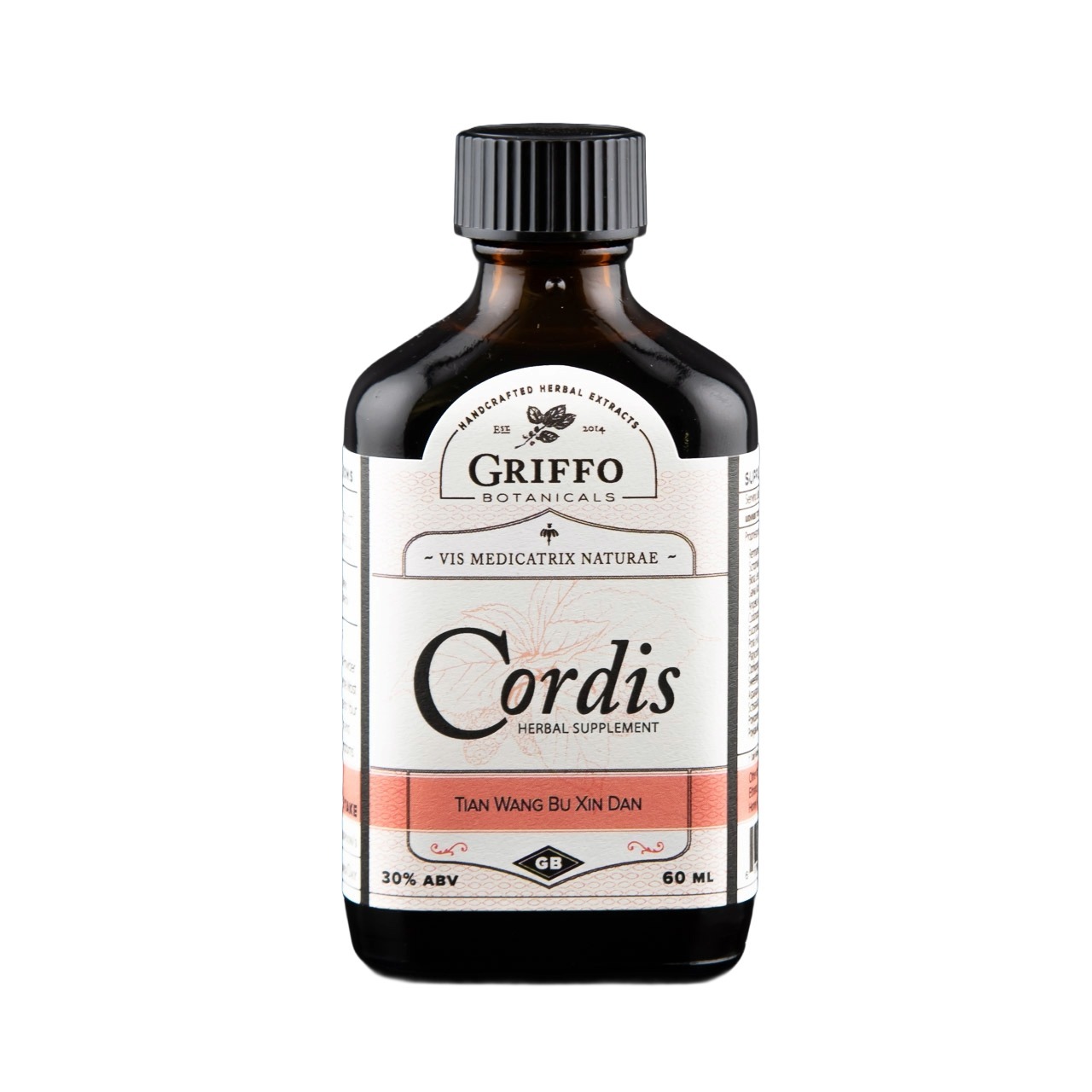
The Taoist Remedy: Cordis (Tian Wang Bu Xin Dan)
When the mirror of the heart is obscured by heat and agitation, we reach for Tian Wang Bu Xin Dan, or Cordis. This formula is much more complex and cooling than Pax. It uses heavy, anchoring herbs like Suan Zao Ren (Sour Jujube Seed) and Sheng Di Huang (Rehmannia) to cool the blood, nourish the Yin, and "anchor" the floating spirit. It is designed to pull the heat down and replenish the cooling fluids of the heart and kidneys. If Pax is a warm blanket for a cold room, Cordis is a deep, cool well for a house on fire. It clears the "noise" and sediment, allowing the water of the Heart-Mind to become still and clear again. It is the primary choice for the overachiever, the person with chronic insomnia, and anyone whose anxiety feels like a fire that won't go out.
Clinical Synthesis: The Work of the Sovereign
Understanding these two paths—the Mencian garden and the Taoist mirror—changes how we view emotional health. Anxiety is not a single diagnosis; it is a signal that the Xin has lost its way. As practitioners and as people managing our own health, we have to ask: Is the Xin starving, or agitated? Do we need to nourish the seeds, or do we need to clear the mirror? At Griffo Botanicals, we formulate our tinctures to speak directly to these philosophical and physiological states. We use high-potency extracts because the Heart-Mind requires clear, vibrant "messages" from the plant world to remember its own original nature.
When the Xin is stable and the Shen is anchored, the rest of the body’s functions—digestion, immunity, and vitality—naturally follow. By bridging the gap between ancient philosophy and modern clinical practice, we provide a path toward healing that is as deep as it is practical. Whether you are seeking the grounding peace of Pax or the cooling clarity of Cordis, you are doing more than just taking a supplement; you are participating in a multi-millennial tradition of restoring the Heart-Mind to its rightful state of peace.
About Frank Griffo, L.Ac.